
Stay Connected with Low Carb Glow

GLP-1 Protein Calculator: Find Your Daily Protein Target
GLP-1 Protein Calculator
Estimate a general daily protein target, see a simple meal-and-snack split, and find easy high-protein, low-carb recipes that fit your routine.
For adults 18+. Educational meal-planning support only not medical advice.
How to Use the GLP-1 Protein Calculator
Enter your age, sex, weight, height, goal, activity level, and current appetite, then review your estimated daily protein range and the suggested meal-and-snack split. The result is an educational starting point for meal planning — not a prescription.
Individual requirements can differ based on medical history, body composition, activity, medications, pregnancy, recovery needs, and other factors. If the estimate differs from a target supplied by your doctor or registered dietitian, follow your healthcare professional’s recommendation.
How Much Protein Do You Need on GLP-1 Medications?

Most research on weight loss with reduced calorie intake supports roughly 1.2–1.6 grams of protein per kilogram of body weight per day — well above the general adult RDA of 0.8 g/kg. For many adults using GLP-1 medications, that lands between about 80 and 140 grams of protein daily.
The 0.8 g/kg baseline in the Dietary Guidelines for Americans was set for weight-stable adults, not for people eating substantially less while losing weight. A 2025 analysis of GLP-1 users on reduced-calorie diets found that protein intake often falls short of what muscle-preservation research suggests. At higher body weights, many clinicians also calculate targets from adjusted body weight rather than total weight, which is why a good calculator may show a lower number than a simple g/kg multiplication.
Example Daily Protein Ranges (1.2–1.6 g/kg)
| Body weight | Estimated daily range | Sample split |
|---|---|---|
| 150 lb (68 kg) | ≈ 82–109 g | 3 meals × 25 g + 1 snack × 10–15 g |
| 180 lb (82 kg) | ≈ 98–131 g | 3 meals × 30 g + 1–2 snacks × 10–15 g |
| 220 lb (100 kg) | ≈ 120–160 g | 3 meals × 35 g + 2 snacks × 15 g |
| 250 lb (113 kg) | ≈ 136–160+ g* | 4 meals × 30–35 g + snacks |
What Your Protein Result Means
Your result is a general planning estimate, not a daily pass/fail test. You do not need to hit the number perfectly at every meal — use the suggested split to build a practical routine around breakfasts, lunches, dinners, and optional snacks, then judge your pattern over a week rather than a single day.
For example, a 120 g daily target usually looks like three meals with 30–35 g of protein each plus one or two small snacks — not one enormous dinner. Spreading protein across the day also supports muscle protein synthesis better than loading it into a single meal.
Why Protein Deserves Attention During GLP-1 Treatment
GLP-1 medications reduce appetite and food intake. When you eat substantially less, it becomes harder to consume enough protein — and research suggests a meaningful share of the weight lost on these medications can be lean mass, not just fat, when protein intake and resistance exercise are inadequate.
Muscle matters beyond appearance: it supports metabolic rate, bone health, strength, and long-term weight maintenance. Pairing an adequate protein intake with regular resistance training (even bodyweight exercises) is the most consistently supported strategy for protecting lean mass during weight loss.
Protein is still only one part of good nutrition. Hydration, fiber, vitamins, minerals, food variety, and personal tolerance also matter. A joint clinical advisory on nutrition during GLP-1 therapy recommends individualized care, attention to nutrient adequacy, management of digestive side effects, and strategies that support muscle and bone health.
Protein Targets by Medication
The medication name matters less than the appetite pattern it creates. All GLP-1 medications can shrink meals and quiet hunger cues, which makes an intentional protein plan more important — especially after a dose increase.
Ozempic and Wegovy (Semaglutide)
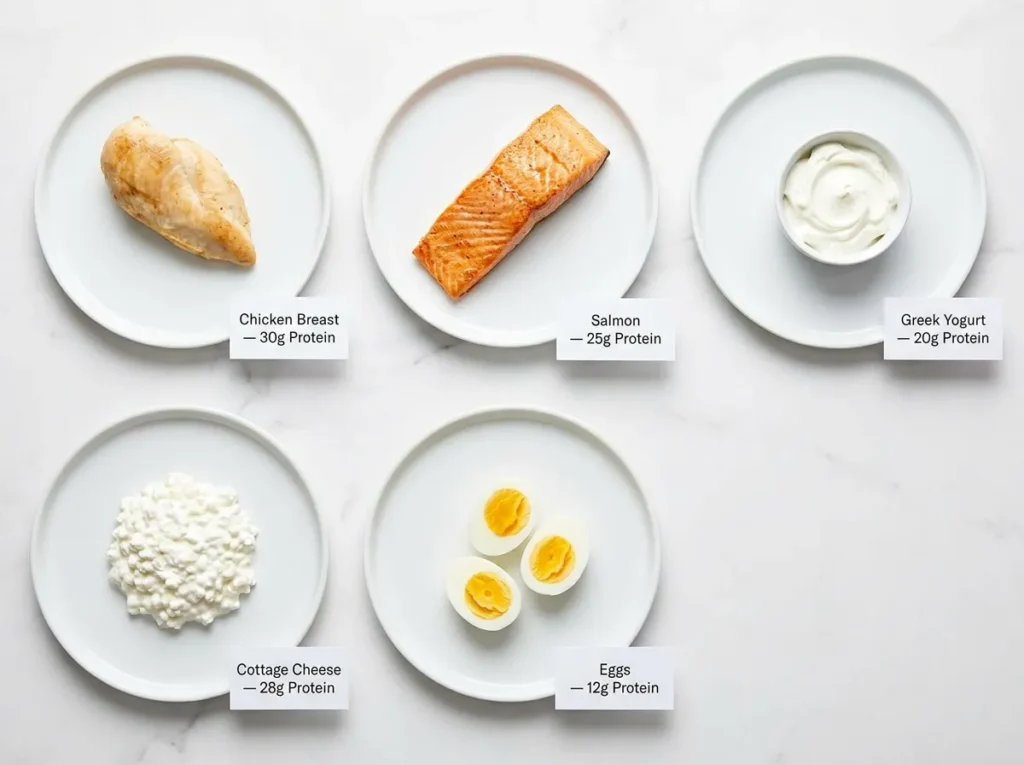
Semaglutide often makes breakfast and lunch feel optional. Treat your calculator result as a floor, and build the day around smaller protein-dense options you tolerate well — eggs, Greek yogurt, cottage cheese, fish, poultry, tofu, or a shake. Our Ozempic first-week guide and Wegovy meal plan show what this looks like in practice.
Mounjaro and Zepbound (Tirzepatide)
Tirzepatide can suppress appetite sharply, especially after dose changes. Meals may shrink, but protein needs do not shrink with them. Spread protein across the day, keep backup options ready for low-appetite days, and pair protein with fiber and fluids. The 7-day Mounjaro meal plan is built around this exact challenge.
Compounded Semaglutide and Tirzepatide
Compounded versions use the same active ingredients, so protein planning follows the same principles: use a realistic daily target, spread it across meals, and favor foods you tolerate. Because compounded dosing can vary more between providers, keep your prescriber informed about appetite changes and any difficulty eating enough.
Making Your Protein Target Practical
A simple approach is to:
- Include a protein source in meals that you tolerate well.
- Spread protein across the day instead of relying on one very large meal.
- Choose smaller portions when appetite is reduced.
- Pair protein foods with vegetables and other nutrient-dense foods.
- Adjust meal size according to comfort and professional guidance.

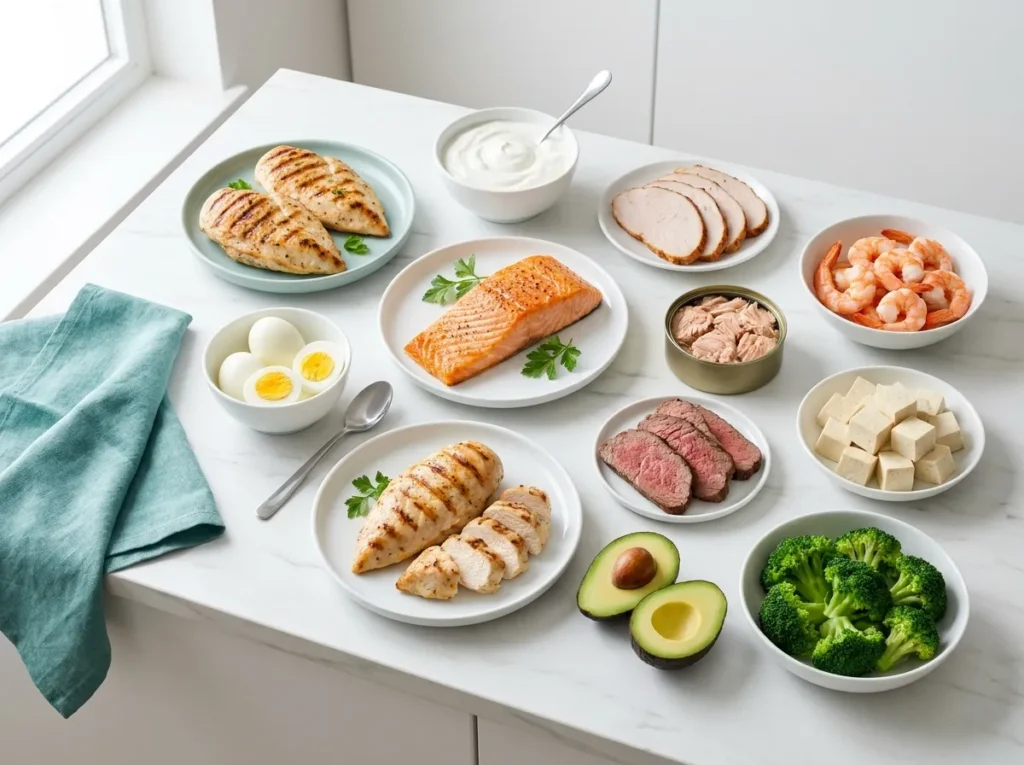
On a low-appetite day, smaller and softer options do the work: a protein smoothie in the morning, cottage cheese or Greek yogurt midday, and a modest portion of fish, eggs, or chicken at dinner can still reach 70–90 g without forcing large meals. Protein needs are not identical for everyone — even official nutrient calculators note that individual requirements may be higher or lower than general reference values (NIH nutrient recommendations).
High-Protein, Low-Carb Foods That Fit GLP-1 Eating
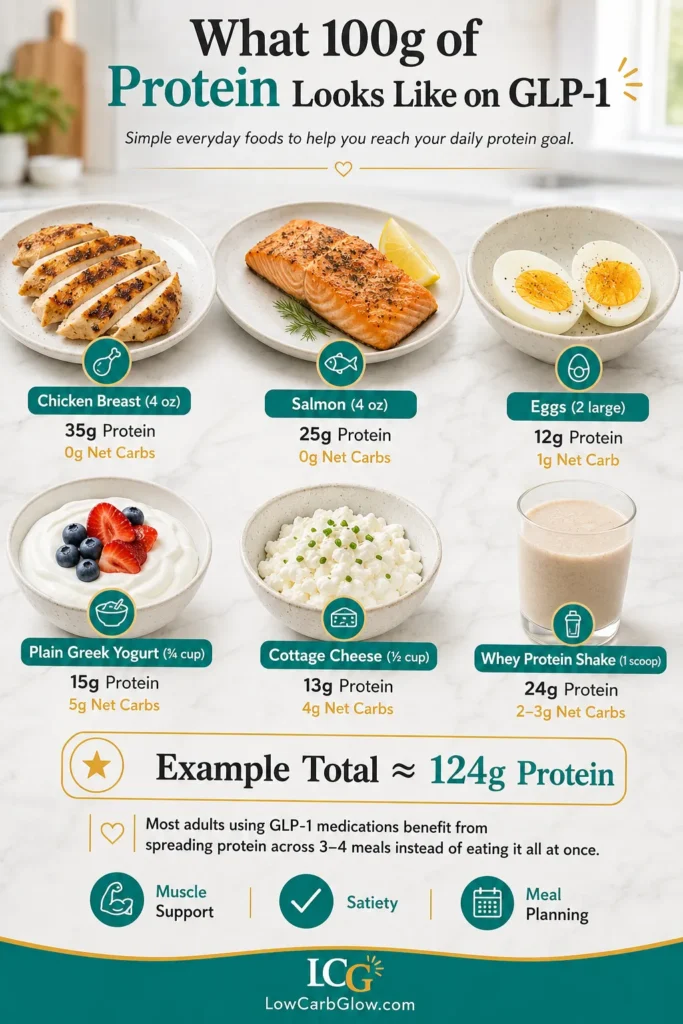
These foods deliver a lot of protein per bite with few carbs — useful when appetite is limited and every portion has to count.
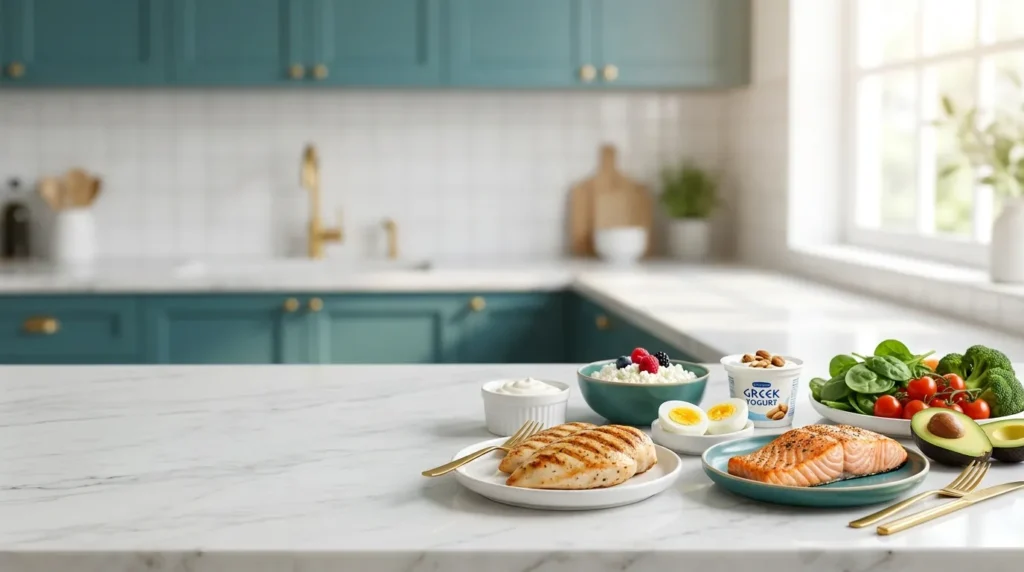
| Food | Portion | Protein | Net carbs |
|---|---|---|---|
| Chicken breast (cooked) | 4 oz | ~35 g | 0 g |
| Canned tuna | 1 can (5 oz) | ~27 g | 0 g |
| Salmon (cooked) | 4 oz | ~25 g | 0 g |
| Whey protein shake | 1 scoop | ~24 g | 2–3 g |
| Plain Greek yogurt | ¾ cup | ~15 g | 5 g |
| Cottage cheese | ½ cup | ~13 g | 4 g |
| Eggs | 2 large | ~12 g | 1 g |
| Firm tofu | ½ cup | ~10 g | 2 g |
For practical meal inspiration, explore our GLP-1-friendly recipes, high-protein GLP-1 meals, low-carb protein smoothies, and muscle-preservation meals.
When to Request Personalized Guidance
Ask a doctor or registered dietitian for an individual target if you are under 18, pregnant or breastfeeding, have kidney or liver disease, take medication for diabetes, have significant digestive symptoms, have a history of disordered eating, or have another condition that affects nutrition.
This calculator should not be used to change medication, treatment, or medically prescribed nutrition instructions.
Sources and Editorial Note
This page was written by the LowCarbGlow editorial team and reflects general guidance from: NIH Office of Dietary Supplements – Nutrient Recommendations, the Dietary Guidelines for Americans, and peer-reviewed research on protein intake during GLP-1 therapy. It is educational content, not medical advice.
Frequently Asked Questions
Protein needs vary by body size, goals, activity level, appetite, and personal health situation. This calculator gives a general educational estimate to help with meal planning. It does not replace medical or dietitian advice.
No. This calculator is only a general meal-planning tool. Always follow guidance from your doctor, registered dietitian, or qualified healthcare professional, especially if you have kidney disease, diabetes, digestive issues, or other medical conditions.
Many people find it easier to reach their daily protein goal by spreading protein across meals and snacks. The calculator shows a simple per-meal target so the daily number feels more practical.
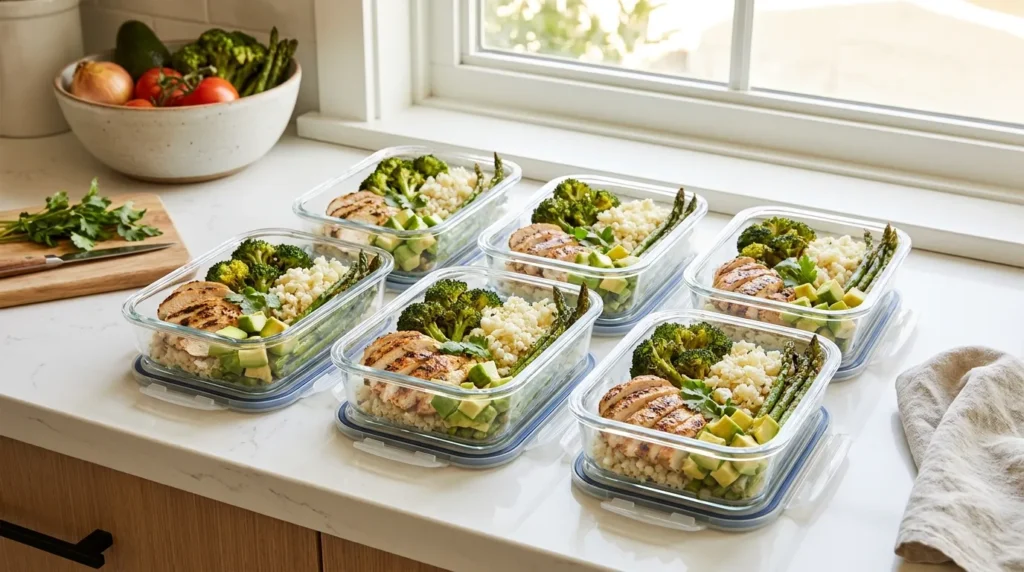
If your appetite is low, try smaller protein servings more often instead of forcing large meals. Smoothies, yogurt bowls, cottage cheese, eggs, chicken salad, tuna salad, soups, and soft meal prep bowls can be easier options.
Recalculate when your weight, activity level, appetite, or meal routine changes. Many visitors may find a weekly check-in helpful.
Yes. The calculator can help you plan how much protein to include across breakfasts, lunches, dinners, and snacks. Use the result to choose simple protein sources and build low-carb meals around them.
This calculator is intended for adults 18+ and provides a general educational estimate for meal planning only. It is not medical advice and does not diagnose, treat, or replace guidance from a doctor or registered dietitian. Protein needs can vary with medical conditions, medications, pregnancy, activity level, and other factors. If you have kidney or liver disease, diabetes, digestive symptoms, a history of disordered eating, are pregnant or breastfeeding, or have concerns about persistent medication side effects, consult a qualified healthcare professional before changing your diet. Do not change your medication or treatment plan based on this calculator.
Rate this calculator
Did it help you plan your protein? Tap a star.
☆☆☆☆☆
5.0 out of 5 · 1 rating