Stay Connected with Low Carb Glow

5 Best Low-Carb Quinoa Substitutes That Actually Work

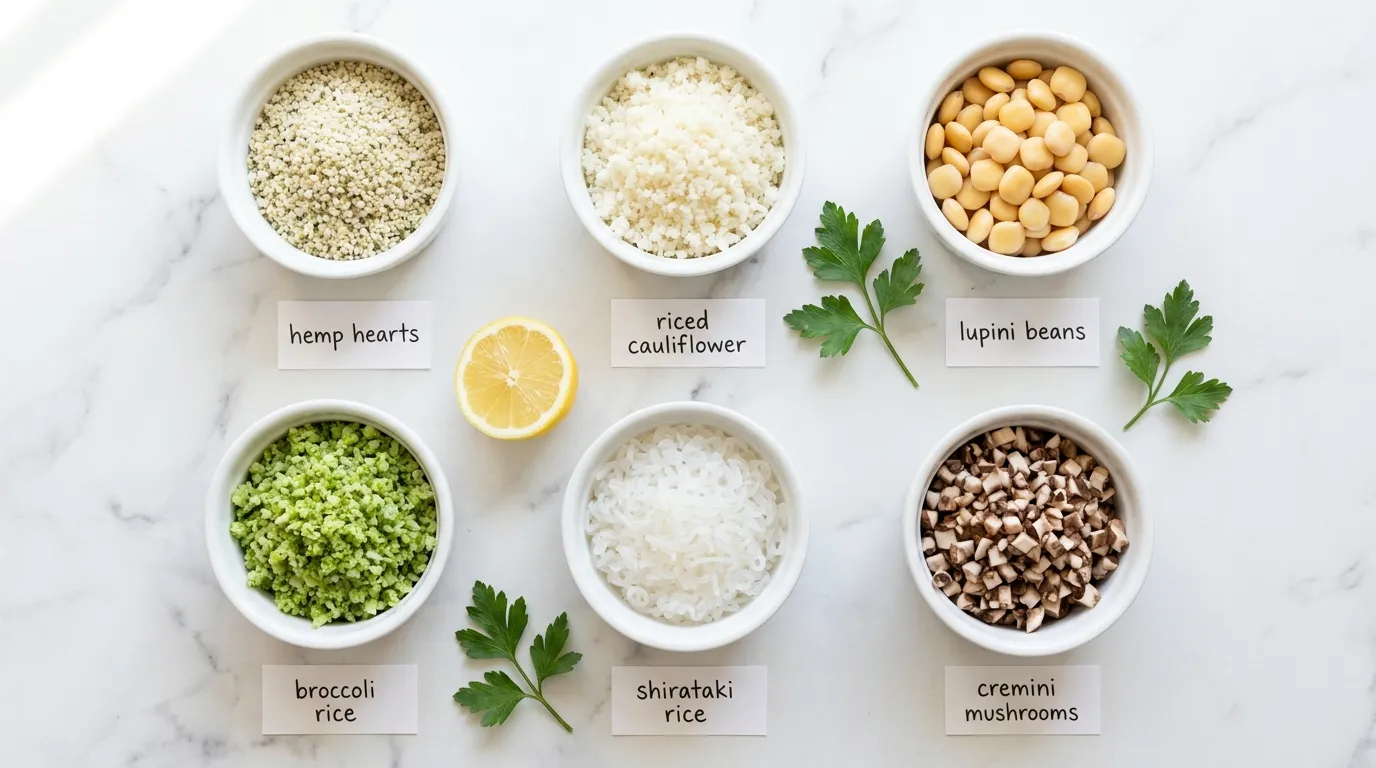
Quinoa searches just hit an all-time high in the US and if you’re eating low-carb, you already know the problem. One cup of cooked quinoa packs 32 grams of net carbs. That’s more than most people’s entire daily carb budget on a strict keto protocol, and the glycemic hit is fast enough to knock you out of ketosis before lunch.
The good news: every dish you make with quinoa can be made just as well often better with one of six practical low-carb substitutes. This guide breaks down all six, shows you exactly which one to use for which type of dish, and gives you the substitution ratios so you can swap without guessing.
Quick Answer
Hemp hearts are the best all-round low-carb quinoa substitute: 1g net carbs per quarter cup, 10g complete protein, no cooking required, and they absorb dressing exactly like quinoa. For warm dishes, use cauliflower rice. For maximum protein, use lupini beans. For zero carbs, use shirataki rice.
Why Quinoa Doesn’t Work for Low-Carb (The Numbers)
Quinoa is marketed as a health food and in some contexts it earns that label. It’s a complete protein, has more fiber than rice, and is gluten-free. But the carb count is a dealbreaker for low-carb and keto eating. Here’s how it stacks up against the best low-carb substitutes:
| Ingredient | Net Carbs (1/2 cup) | Protein (1/2 cup) | Cook Required? | Low-Carb? |
|---|---|---|---|---|
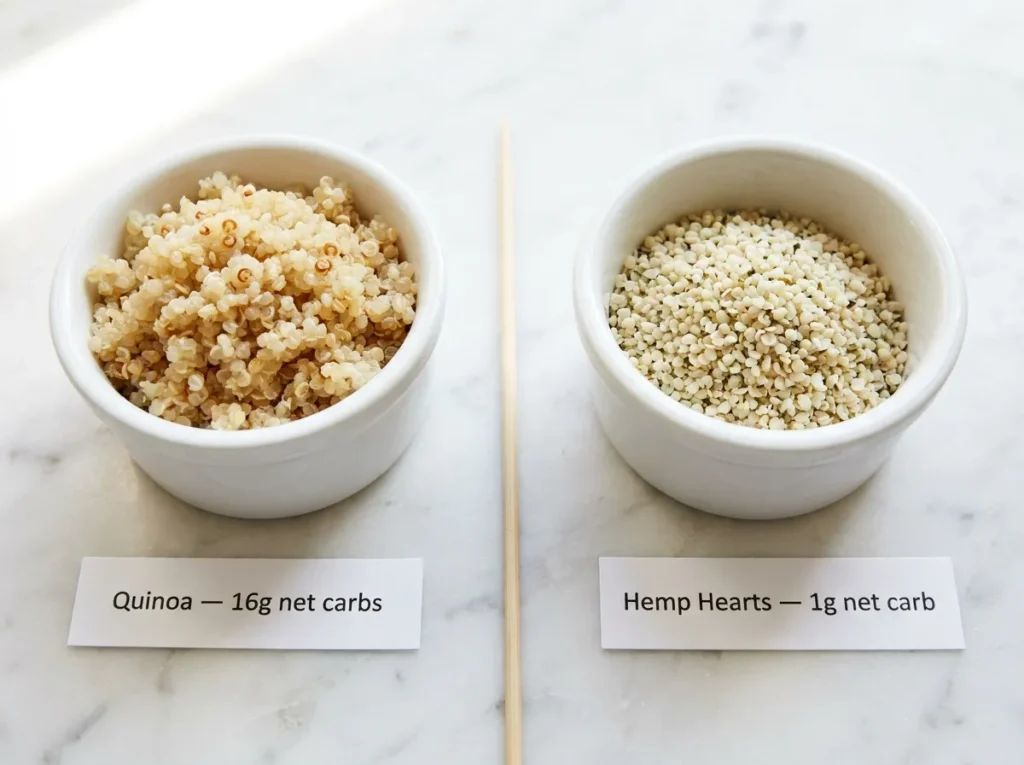
| Quinoa (cooked) | 16g | 4g | Yes | No |
| Brown rice | 20g | 3g | Yes | No |
| Bulgur | 13g | 3g | Yes | No |
| Hemp hearts | 1g | 10g | No | Yes |
| Cauliflower rice | 2g | 1g | 5 min | Yes |
| Lupini beans | 4g | 13g | No (canned) | Yes |
| Shirataki rice | 0g | 0g | Rinse + dry-fry | Yes |
| Mushroom rice | 2g | 2g | 5 min | Yes |
The verdict: quinoa has roughly 8x more net carbs than hemp hearts the substitute that most closely mimics its texture in cold salads and grain bowls. Quinoa also requires 15–20 minutes of cooking; hemp hearts go straight from the bag into your bowl.
The 6 Best Quinoa Substitutes for Low-Carb Eating
1. Hemp Hearts Best Overall
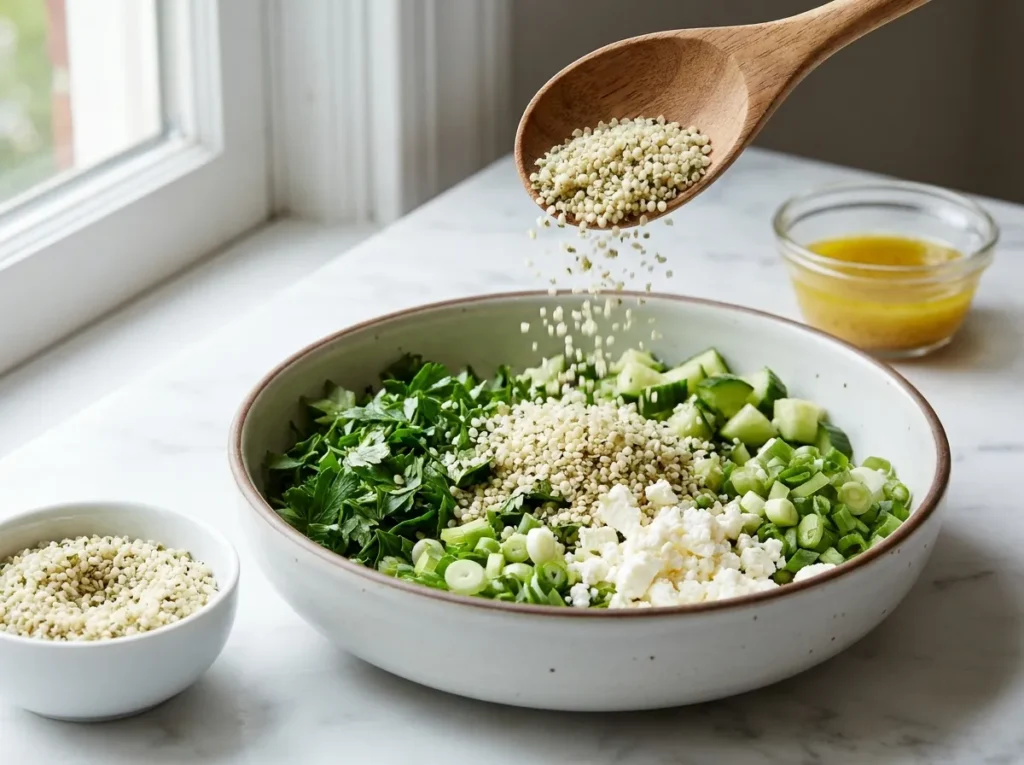
Hemp hearts are the closest thing to a true quinoa replacement for low-carb eaters. They’re small, slightly nutty, and absorb dressing and seasoning exactly like cooked quinoa. Unlike cauliflower rice, they don’t add moisture or alter the flavor profile. No cooking, no prep straight from the bag.
Macros per 1/4 cup: 1g net carbs, 10g protein, 12g healthy fat. Hemp hearts are also a complete protein, containing all 9 essential amino acids rare for a plant source, and something quinoa is also praised for.
Best for: Cold salads, grain bowls, tabbouleh-style dishes, and Mediterranean bowls. We use hemp hearts as the direct bulgur and quinoa replacement in our low-carb Jennifer Aniston salad the texture is nearly identical to fine-grain quinoa and the bowl holds up in meal prep containers for 5 full days.
Pro tip: Lightly toast hemp hearts in a dry pan for 2 minutes to develop a slightly nuttier, deeper flavor before adding to any dish.
2. Cauliflower Rice Best for Warm Dishes
Cauliflower rice is the most widely available low-carb grain substitute and works best in warm dishes stir-fries, burrito bowls, curry bases, fried rice. It’s less effective in cold salads because it releases moisture as it sits, softening within a few hours of being dressed.
Macros per 1/2 cup cooked: 2g net carbs, 1g protein, 0g fat. Saute with olive oil, garlic, and salt for 4–5 minutes until just golden. Avoid steaming it makes it mushy.
3. Lupini Beans Best for Protein
Lupini beans are the highest-protein option on this list. At 4g net carbs and 13g protein per half cup, they beat quinoa on both counts. The firm, slightly chewy texture works well in Mediterranean salads and grain bowls where you want something with more substance.
Macros per 1/2 cup: 4g net carbs, 13g protein, 3g fat. Research shows high-protein foods like lupini drive significantly greater satiety than carbohydrate-matched alternatives. Our low-carb kisir recipe pairs lupini beans with hemp hearts for protein from two sources at under 5g net carbs total.
4. Broccoli Rice Best for Nutrients
Pulse broccoli in a food processor to rice-sized pieces and you get a nutrient-dense base with more flavor than cauliflower rice. It holds its texture slightly better during cooking and adds vitamins C and K to whatever you’re making.
Macros per 1/2 cup cooked: 3g net carbs, 2g protein, 0g fat. Best for warm grain bowls, stir-fries, and dishes where a mild vegetable flavor complements the sauce.
5. Shirataki Rice Lowest Carb Option
Made from konjac root, shirataki rice has essentially zero net carbs and zero calories. The texture is chewy and slightly gelatinous it does not work in cold dishes, but in hot soups, stews, and saucy bowls it functions well as a filler that carries bold flavors.
Critical prep step: Rinse under cold water for 60 seconds, then dry-fry in a hot pan with no oil for 2 minutes. This removes the packaged smell and dramatically improves texture. Skip this step and you will understand why some people dislike shirataki.
6. Mushroom Rice Best for Umami Dishes
Finely diced cremini, white button, or shiitake mushrooms create a rice-like texture with deep umami flavor that most grain-swap guides overlook entirely. The natural savory depth means less seasoning is needed and the overall bowl is more satisfying.
Macros per 1/2 cup cooked: 2g net carbs, 2g protein, 0g fat. Best for Asian stir-fry bowls, stuffed peppers, and any dish where a meaty, savory base enhances the overall profile. Saute with garlic and sesame oil for maximum flavor.
Which Substitute for Which Dish: The Matching Guide
| Dish Type | Best Substitute | Why |
|---|---|---|
| Cold salad (tabbouleh, kisir) | Hemp hearts | Absorbs dressing, no moisture release, no cooking |
| Grain bowl (warm) | Cauliflower rice or mushroom rice | Absorbs hot sauces, holds texture when warm |
| Burrito bowl | Cauliflower rice | Neutral flavor takes on spices perfectly |
| Mediterranean bowl | Hemp hearts + lupini beans | High protein, complements olive oil and herbs |
| Asian stir-fry | Mushroom rice or broccoli rice | Umami depth matches soy and sesame profile |
| 5-day meal prep | Hemp hearts | No sogginess, stable texture all week |
| Soup or stew base | Shirataki rice | Zero carbs, absorbs broth flavor completely |
| High-protein bowl | Lupini beans | 13g protein per half cup, firm satisfying texture |
Substitution Ratios for Any Recipe
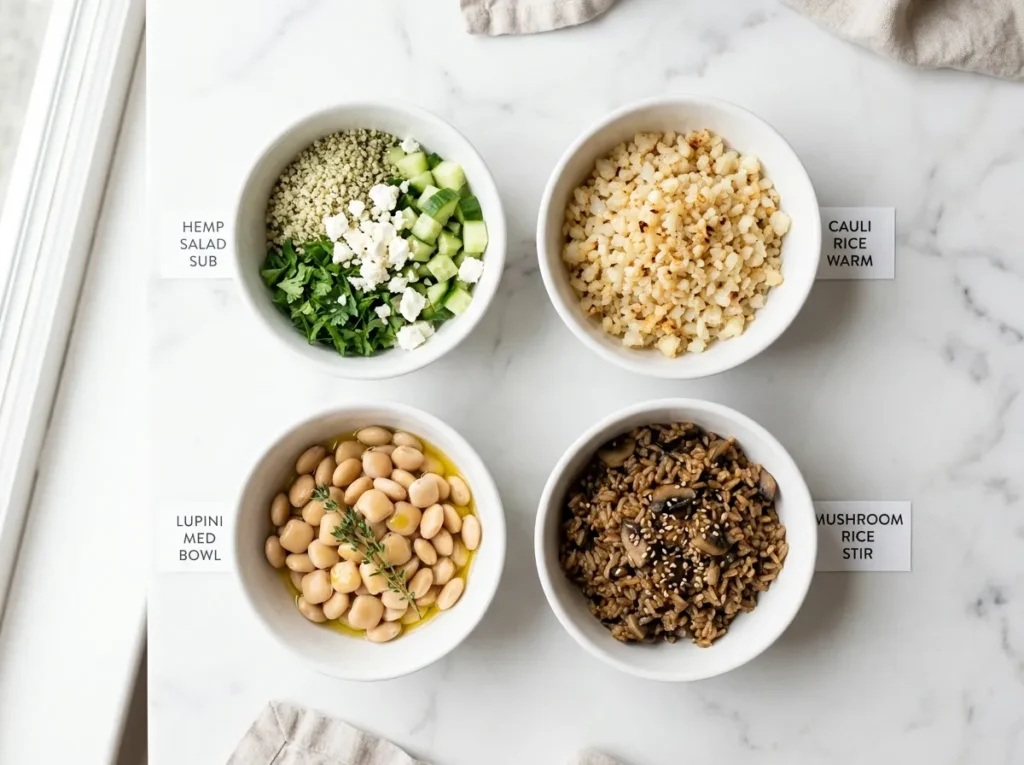
- Hemp hearts: 1:1 by volume. No cooking. Add straight to any cold dish.
- Cauliflower or broccoli rice: Use 1.5x the volume called for. Saute first; it cooks down.
- Lupini beans: Use half the volume. They are denser and more filling than quinoa.
- Shirataki rice: 1:1. Always rinse and dry-fry before use.
- Mushroom rice: Use 1.25x. Mushrooms lose volume during cooking.
Common Mistakes When Swapping Quinoa
- Using cauliflower rice in a cold dish. It releases moisture as it sits and turns soft within 2–3 hours. Hemp hearts are the correct tool for cold prep.
- Skipping the dry-fry on shirataki. Two minutes in a hot dry pan removes both the smell and the gelatinous texture issue.
- Under-seasoning hemp hearts. They absorb flavor well, which means your dressing or seasoning needs to be slightly more assertive than you would use with quinoa.
- Overcooking vegetable rices. Saute on medium-high for 4–5 minutes maximum. Remove from heat while still slightly firm.
- Not rinsing lupini beans. Canned lupini have strong brine. Drain and rinse well before use.
Meal Prep Performance: How Long Each Substitute Lasts
| Substitute | Fridge Life (dressed) | Fridge Life (undressed) | Notes |
|---|---|---|---|
| Hemp hearts | 4–5 days | 2–3 weeks (dry) | Best overall for meal prep |
| Cauliflower rice | 2–3 days cooked | 3–4 days raw | Gets soft after day 2 in liquid |
| Lupini beans | 4–5 days | 5–7 days (canned, drained) | Excellent meal prep option |
| Broccoli rice | 2–3 days cooked | 3 days raw | Similar to cauliflower rice |
| Shirataki rice | 3–4 days cooked | Months (in original liquid) | Prep and store dry |
| Mushroom rice | 3–4 days cooked | 4–5 days raw | Flavors deepen over time |
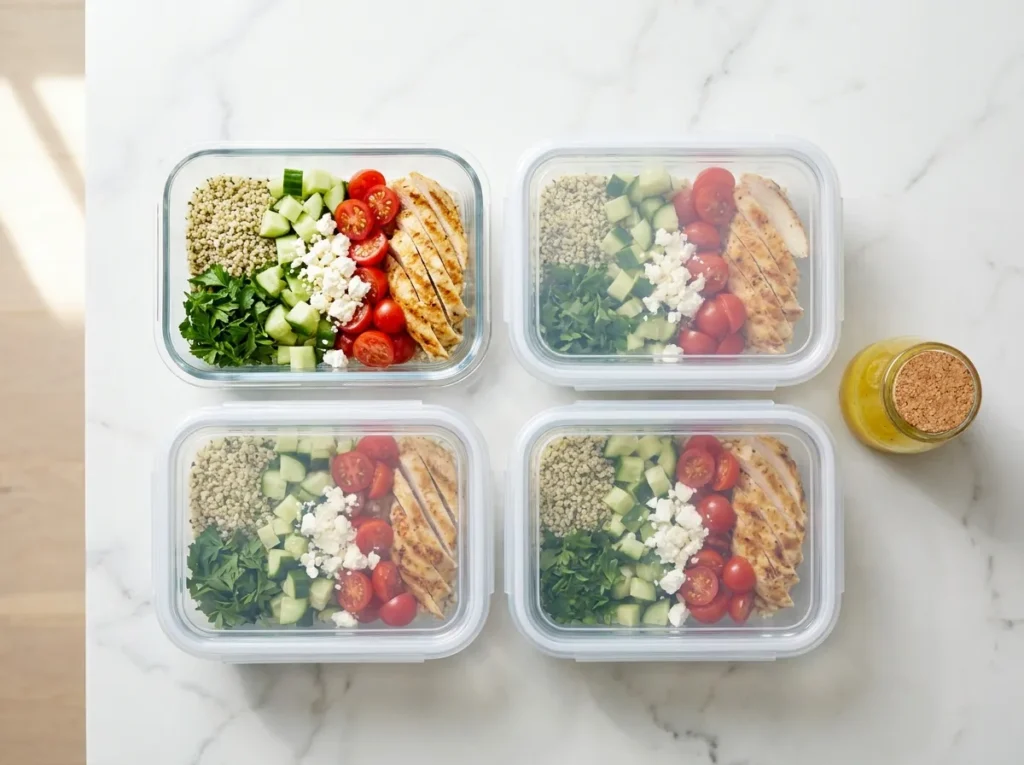
For a full week of structured meal prep built around these substitutes, our high-protein low-carb meal prep guide covers the full Sunday workflow batch proteins, portion everything, and get assembly down to under 3 minutes per day.
The Bottom Line
For cold salads and meal prep, hemp hearts are the best quinoa substitute. They match the texture, cut the net carbs by 94%, double the protein, and need zero prep time. For warm dishes, cauliflower or mushroom rice. For maximum protein, lupini beans.
The key is matching the substitute to the cooking method. For a direct side-by-side breakdown of the two most popular options, see our full quinoa vs hemp hearts comparison it covers taste, cost, protein bioavailability, and exactly when each one wins.
Frequently Asked Questions
What is the best low-carb substitute for quinoa?
Hemp hearts are the best low-carb quinoa substitute. They have 1g net carb per quarter cup versus 16g for a half cup of cooked quinoa, contain 10g of complete protein per serving, require no cooking, and have a soft seed texture that works identically to quinoa in cold salads and grain bowls.
What is the closest thing to quinoa?
For low-carb eating, hemp hearts are the closest thing to quinoa. They share the same small seed size, nutty flavor, complete protein profile, and ability to absorb dressings. For people not restricting carbs, amaranth and millet are the closest in terms of protein content, texture, and cooking behavior. Hemp hearts are the only option that also cuts the net carbs by over 90%.
Can I eat quinoa on a keto diet?
No quinoa has 32g net carbs per cooked cup, which exceeds the daily limit for most keto protocols. Even a half-cup serving uses up most of a strict keto day’s carb budget. Hemp hearts, cauliflower rice, and shirataki rice are all genuinely keto-friendly alternatives that work in the same dish types.
Does quinoa lower triglycerides?
Some studies suggest quinoa may modestly support triglyceride reduction due to its fiber and antioxidant content. However, hemp hearts have stronger evidence for triglyceride management: their high omega-3 fatty acid (ALA) content is directly linked to reduced triglyceride levels. If managing triglycerides is a priority, hemp hearts are the better choice they deliver the same complete protein as quinoa with the added cardiovascular benefit of plant-based omega-3s.
Can a prediabetic person eat quinoa?
Quinoa is one of the better grain options for prediabetics due to its lower glycemic index (GI 53) compared to white rice (GI 73) or bread (GI 70+). However, at 16g net carbs per half cup, portion control is critical. Hemp hearts are a better alternative for blood sugar management they have a negligible glycemic impact, 10g of protein per serving (which slows glucose absorption), and virtually zero carbohydrates. For prediabetics using a low-carb approach to reverse insulin resistance, hemp hearts are the clearer choice.
Does quinoa help with collagen?
Quinoa contains lysine, an essential amino acid required for collagen synthesis in the body. It does not contain collagen directly, but the amino acid profile supports your body’s own collagen production. Hemp hearts also contain lysine and all essential amino acids, including the proline and glycine needed for collagen formation. For a low-carb diet focused on skin, joint, or connective tissue health, hemp hearts provide the same collagen-supporting amino acids as quinoa with far fewer carbohydrates.
Are hemp hearts a complete protein like quinoa?
Yes hemp hearts contain all 9 essential amino acids, making them a complete protein just like quinoa. They have more protein per serving than quinoa (10g versus 4g per half cup), with significantly fewer carbs and more healthy fat from omega-3 and omega-6 fatty acids.
What is a good quinoa substitute for meal prep?
Hemp hearts are the best quinoa substitute for meal prep. They do not get soggy, hold their texture for 4–5 days dressed in the fridge, and require zero cooking. Lupini beans are the second-best option if you want a legume texture they also last 4–5 days without breaking down.
What can I use instead of quinoa in a salad?
Hemp hearts are the best quinoa substitute in salads. Use them 1:1 by volume with no cooking required. They absorb vinaigrette and lemon dressings exactly like cooked quinoa, do not release moisture as the salad sits, and add 10g of protein per quarter cup. Lupini beans also work well in salads for a heartier, chewier texture.
How many carbs are in quinoa vs cauliflower rice?
Quinoa has 16g net carbs per half cup cooked. Cauliflower rice has 2g net carbs per half cup cooked an 87% reduction. Cauliflower rice is the better swap for warm dishes; hemp hearts (1g net carbs per quarter cup) are better for cold salads and meal prep where added moisture would soften the dish.